Data Center Control Panels: 11 Tips for Industrial Control Panel Design to Maximize Uptime

Data centers are built around one critical expectation: uptime.
Data centers are the backbone of modern business operations, powering websites, file storage, AI tools, and many more electronic activities, so it is imperative that each center is up and running as close to 100% of the time as possible.
In addition to networks and servers, data center control panels also play a critical role in keeping these environments running reliably. Behind every cooling system, power distribution unit, and monitoring platform within the center is a control panel ensuring everything operates as intended.
That’s why industrial control panel design for data centers must go beyond basic functionality; it must be engineered specifically to protect and maintain uptime.
Below are the most important design considerations when building control panels for data center environments.
- Eliminate Single Points of Failure in Data Center Control Panels
One of the core principles of data center infrastructure is simple: no single failure should bring down the system.
This is why data centers operate with redundancy in mind. Redundancy in the context of data centers means having backup systems and duplicate components so that if one fails, another immediately takes over without interruption. It’s applied to critical infrastructure like power, cooling, networking, and control systems to eliminate single points of failure. The goal is to ensure continuous operation and protect uptime even during equipment failures or maintenance.
Effective industrial control panel design reflects this by incorporating:

- Dual power inputs (A/B feeds)
- Redundant power supplies
- Parallel control paths for critical functions
For data center control panels, redundancy is a requirement for uptime.
- Implement Redundant Control Architecture
Control systems that manage cooling, power, and monitoring also use redundancy as best practice.
Leading data center control panels include:
- Primary and backup PLCs
- Redundant I/O modules
- Hot standby configurations
This level of redundancy ensures continuous operation, even if a critical component fails.
- Design for Fail-Safe Operation
A key element of advanced industrial control panel design is planning for failure scenarios. Part of this includes designing with redundancy as discussed above. Another portion of this includes smart default design.
When something goes wrong, the system should default to a safe state that protects uptime. Examples include:
- Cooling systems defaulting to ON
- Alarm systems triggering on signal loss
- Valves moving to safe positions during faults
For data center control panels, fail-safe behavior prevents minor issues from escalating into full outages.
- Optimize Thermal Management Inside the Panel
Data centers produce an immense amount of heat that can compromise performance and uptime. Thermal management systems are needed both for the center’s entire environment as well as each individual control panel.
High-density components within data center control panels generate heat that must be managed effectively.
Best practices include:
- Proper component spacing
- Strategic airflow design
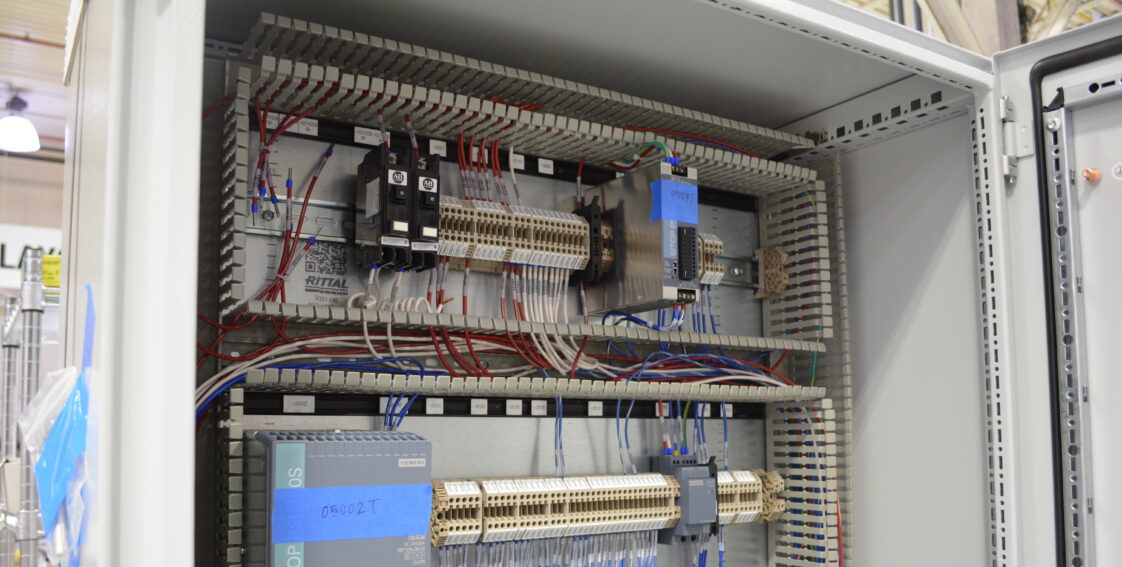
- Use of filtered fans, heat exchangers, or enclosure cooling units
Strong industrial control panel design that accounts for thermal management ensures the long-term reliability of each component within the panel.

- Segment and Isolate Critical Systems
Fault isolation is essential when designing data center control panels. Systems within data centers should be designed so that if one part fails, it’s contained to that area. By isolating faults, you prevent a small issue from triggering a chain reaction that could cause a larger outage.
Well-designed data center control panels include:
- Separation of control and power sections
- Circuit isolation
- Proper overcurrent protection
Fault isolation within data center control panels helps protect overall uptime and system stability.
- Enable Real-Time Monitoring and Visibility
Engineers at modern data centers are constantly monitoring systems to maintain uptime.
Your industrial control panel design should support:
- Internal temperature monitoring
- Power and system status indicators
- Component-level alerts
- Integration with BMS or SCADA systems
High-visibility data center control panels allow operators to detect and resolve issues before they lead to downtime.
- Design for Fast Maintenance and Serviceability
Even the most reliable systems require maintenance from time to time. In data centers, ensuring this maintenance can be performed swiftly is imperative to maintaining uptime.
The speed at which maintenance can be performed on your control panels relies on many factors, starting with the way the control panel is designed.
Effective industrial control panel design for maintenance should prioritize:
- Clear labeling and documentation
- Easy access to components
- Modular design for quick replacement
Reducing the mean time to repair (MTTR) is a direct contributor to improved uptime.
- Use Proven, High-Reliability Components
Another contributor to maintaining uptime is choosing the right components for your control panels. Component selection is critical in data center control panels to ensure reliability of the panel and prevent premature failures.
To maximize reliability:
- Use industrial-grade, field-proven components
- Standardize parts across builds
- Avoid unnecessary complexity
A single unreliable component can undermine an otherwise robust industrial control panel design and compromise uptime. Instead of choosing components based on their one-time cost, consider the opportunity cost of the component. While one type of component may be cheaper now, it can cause costly maintenance if it fails prematurely after installation.
- Incorporate Surge Protection and Proper Grounding
Preventing power disturbances is another crucial part of protecting a data center’s uptime rate. Power disturbances can cause unexpected failures and equipment damage, causing your whole system to go down in extreme cases.
Robust data center control panels should include:
- Surge protection devices

Custom HMI built by MIS Controls. - Proper grounding systems
- Protection against transient voltage events
These safeguards are essential to maintaining uptime in high-power environments.
- Standardize Industrial Control Panel Design for Scalability
Data centers need to be built for scalability so they can grow capacity without major redesign or downtime as demand for data, cloud services, and AI increases. Scalable design allows operators to add servers, power, and cooling in phases while maintaining uptime. It also reduces long-term costs by avoiding inefficient, one-off expansions.
Consistency is key when designing for scalability in data centers.
Standardized data center control panels offer:
- Faster troubleshooting
- Easier technician training
- Reduced variability across deployments
Consistent industrial control panel design improves reliability and simplifies long-term operations as data centers grow.
- Plan for Communication Redundancy
Many data center control panels rely on network communication for control and monitoring.
To avoid loss of visibility or control:
- Implement redundant network paths
- Use failover communication protocols
- Ensure systems can operate safely during network disruptions
Communication resilience is a critical component of uptime-focused industrial control panel design.
Why Data Center Control Panels Matter for Uptime
In a data center, small failures can quickly escalate.
A minor issue within a control panel can lead to:
- Cooling system disruptions
- Power instability
- System-wide shutdowns
That’s why data center control panels must be designed with uptime as the primary objective. From component selection to system architecture, each decision in the design process should support reliability, fault tolerance, and rapid recovery.
By engineering data center control panels for resilience, redundancy, and performance, manufacturers and engineers can play a critical role in supporting the infrastructure that keeps the digital world running.
At MIS Controls, we understand the unique challenges of data center environments and build custom control panels built for reliability, scalability, and performance. For more information on optimizing your control panels for data centers, contact us here: https://www.miscontrols.com/contact-us/